What Makes Solana Stand Out in the Crypto Market and How Is It Quietly Winning
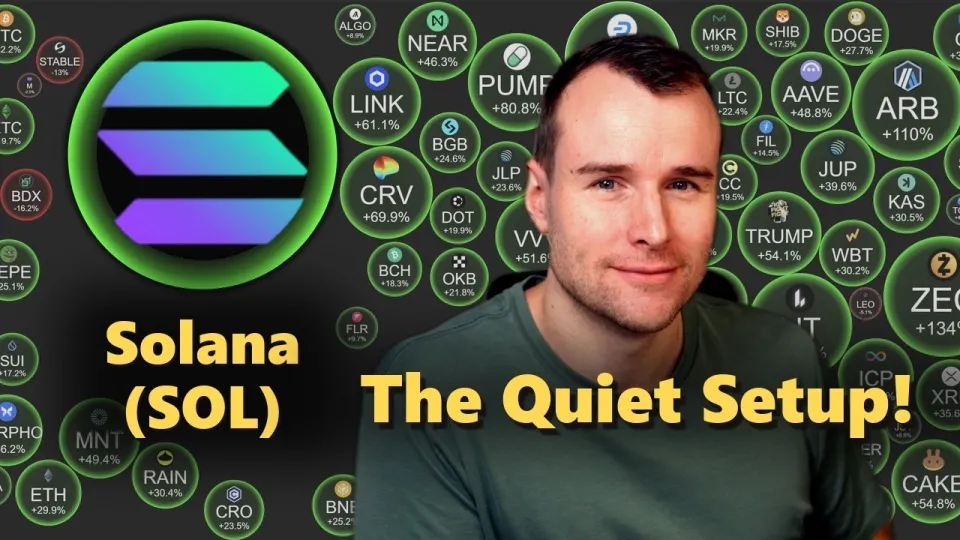
Video: 🚀 Solana Is Quietly Winning - SOL Crypto Analysis
Want articles like this for your own video to promote it on YouTube and Google? Order them through the Telegram bot @sat_sit_bot. Articles with your video embedded are written and posted by the bot itself — on popular topical sites (no ads). Free trial — 50 articles.
· based on the channel Bitcoin Strategy
Solana is quietly winning attention in the cryptocurrency world by offering a unique combination of high-speed transactions, low fees, and a rapidly expanding ecosystem. Unlike Ethereum, which remains the dominant smart contract platform, Solana distinguishes itself through technological innovations and improving fundamentals that make it an attractive option for both developers and investors. For those interested in exploring Solana further, a bonus and registration offer is available that facilitates automatic copy trading and other tools.
How Solana Compares to Ethereum in Performance and Fees
Solana's core advantage lies in its ability to process over 50,000 transactions per second (TPS), far surpassing Ethereum's current throughput. This capability is paired with exceptionally low transaction fees, often just a fraction of a cent, making Solana ideal for applications requiring high scalability and cost efficiency. Ethereum, while maintaining a broader decentralized finance (DeFi) ecosystem, still struggles with higher gas fees and network congestion. However, Ethereum’s move to proof-of-stake and layer-2 solutions continue to keep it competitive.
Recent Developments and Network Upgrades
The Solana network has experienced some hiccups, including a delayed launch of certain upgrades that were planned to enhance network stability. Despite this, the overall trend remains positive. The Firedancer upgrade, a major milestone expected soon, is designed to leverage a new validator client built with performance in mind, promising to increase network reliability and throughput. This upgrade is highly anticipated by the community as it addresses past concerns about network outages and congestion.
Solana’s Fee Structure and Inflation Dynamics
Since the summer, Solana's average fees have remained remarkably low, offering a clear advantage for users and developers who prioritize cost-effective transactions. Moreover, Solana's inflation rate has been reduced recently, which helps in maintaining token scarcity and potentially supporting price appreciation. Although some critics point out that Solana remains inflationary, the lowered inflation rate is a sign that the protocol is adapting its economic model to be more appealing to long-term holders.
Growing Institutional Interest and ETF Inflows
Institutional adoption of Solana is on the rise, with several Solana-based ETFs (Exchange Traded Funds) attracting increasing inflows. This trend reflects growing confidence among professional investors in Solana’s long-term prospects. ETFs provide a regulated and accessible way for institutional and retail investors alike to gain exposure to SOL without holding the token directly, which can help drive demand and liquidity.
Common Questions and Community Insights on Solana
Many in the crypto community are curious about whether Solana can eventually outperform Ethereum and reach price levels like $600 or even $1,000 per SOL, which some consider a wild but possible scenario given current fundamentals. Others raise concerns about inflation and network competition from Ethereum layer-2 solutions like Arbitrum. Additionally, the excitement around projects like Alpenglow and updates such as Firedancer reflect a vibrant developer ecosystem that could drive future adoption. Despite some skepticism, Solana holders often highlight the token’s lower inflation and unique speed as key reasons to maintain their positions.
Useful Links
- Automatic Copy Trading and Bonuses: https://the-bitcoin-strategy.com/r/gOETmjod
- Chart Software for Trading Analysis: https://the-bitcoin-strategy.com/tradingview
- Recommended Hardware Wallet: https://the-bitcoin-strategy.com/ledger
Conclusion
Solana is steadily carving out a strong position in the crypto market by combining rapid transaction speeds, low fees, and ongoing technological improvements like the Firedancer upgrade. While Ethereum remains the dominant smart contract platform, Solana's unique advantages and growing institutional interest suggest it is quietly winning over users and investors seeking scalability and efficiency. For those looking to explore Solana with tools and bonuses, the Bitcoin Strategy channel offers valuable resources and updates to track this promising crypto asset.
For automated trading and more information, visit Bitcoin Strategy’s bonus page.
Key takeaways
- Solana processes over 50,000 transactions per second with low fees.
- Ethereum still leads in decentralized finance (DeFi) but Solana is closing the gap.
- Solana's upcoming Firedancer upgrade aims to boost network performance further.
- Solana has lower inflation compared to many competitors, improving tokenomics.
- Institutional interest via Solana ETFs is increasing, signaling growing adoption.
Source: 🚀 Solana Is Quietly Winning - SOL Crypto Analysis · Markdown version
Questions & answers
Is Solana faster and cheaper than Ethereum?
Yes, Solana processes over 50,000 transactions per second with fees often under a cent, making it significantly faster and cheaper than Ethereum’s current network.
What is the Firedancer upgrade and why is it important?
Firedancer is a planned upgrade featuring a new high-performance validator client aimed at improving Solana’s network stability and throughput, addressing past outages and enhancing scalability.
Does Solana have inflation and how does it affect its price?
Solana is inflationary but has recently reduced its inflation rate, which can help maintain token scarcity and potentially support long-term price growth.
Are institutional investors interested in Solana?
Yes, increasing inflows into Solana ETFs signal growing institutional interest, indicating confidence in Solana’s potential from professional investors.