What do you need to know before you start forex trading as a beginner?
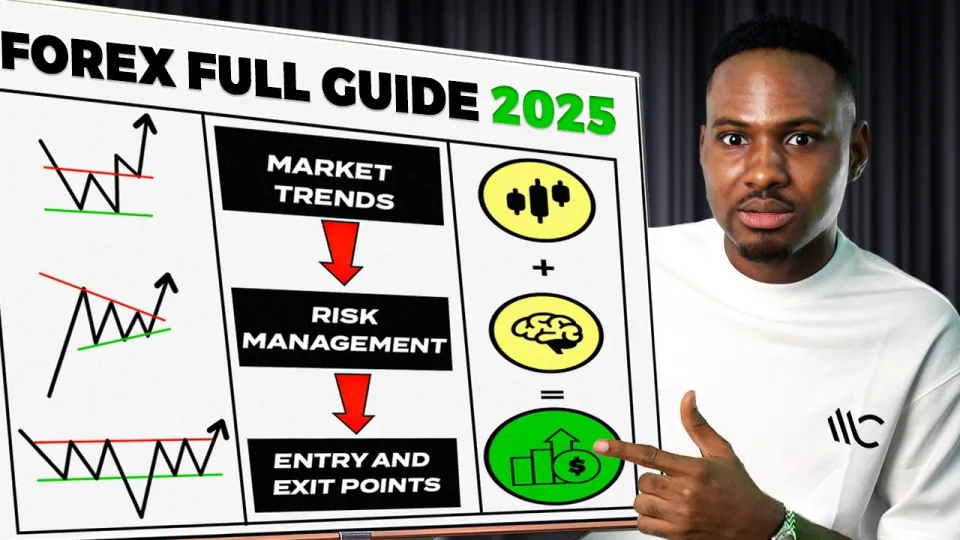
Video: How To Start Forex Trading For Beginners’ 2025 (Full Course)
Want articles like this for your own video to promote it on YouTube and Google? Order them through the Telegram bot @sat_sit_bot. Articles with your video embedded are written and posted by the bot itself — on popular topical sites (no ads). Free trial — 50 articles.
· based on the channel Jeffrey Benson Forex
Forex is the market where national currencies are traded against each other in pairs, and a beginner can start learning it with a demo account, a charting platform and a written risk rule before risking real money. The core skill is not predicting the future but reading price, sizing positions correctly and repeating a defined process. A structured starting point such as the beginner course offered on the Fire Pips FX plans page helps because it walks through the same sequence professionals use: market mechanics, tools, strategy, execution and error control.
What forex trading actually is and how currency pairs are quoted
Forex trading is the exchange of one currency for another at an agreed price, and retail traders participate by speculating on whether a pair will rise or fall. Every quote has two sides: the base currency on the left and the quote currency on the right. In EUR/USD at 1.0850, one euro costs 1.0850 US dollars, and a move to 1.0900 means the euro strengthened against the dollar.
Three conventions are worth memorising before anything else:
- Pip. The standard smallest move for most pairs is the fourth decimal place, so 1.0850 to 1.0851 is one pip. For yen pairs the pip sits at the second decimal.
- Spread. The difference between the bid and the ask is the broker's built-in cost. A 1.2-pip spread on EUR/USD means a trade starts slightly negative.
- Lot size. One standard lot is 100,000 units of the base currency, a mini lot is 10,000 and a micro lot is 1,000. Pip value scales with lot size, which is why lot choice is a risk decision, not a cosmetic one.
Major pairs such as EUR/USD, GBP/USD, USD/JPY and USD/CHF carry the tightest spreads and the deepest liquidity, which makes them the sensible first laboratory for a new trader. Exotic pairs look attractive because they move a lot, but wider spreads and thinner books punish inexperience quickly.
How the forex market works across sessions and time zones
Forex is an over-the-counter market with no single exchange; banks, funds, brokers and retail participants trade through a decentralised network, and that is why prices can differ slightly between venues. It operates around the clock from Monday morning in Asia to Friday evening in New York.
The trading day is divided into four sessions:
- Sydney opens the week and is the quietest.
- Tokyo covers Asian hours and is active in yen and Australian dollar pairs.
- London is the largest session by volume and sets the tone for the European day.
- New York overlaps with London for a few hours, and that overlap is typically the most liquid and volatile window.
Volatility is not the same as opportunity. A beginner who trades the dead hours of the Asian session on a euro pair often sees choppy ranges, while the London open produces clean directional moves and also sharper stop hunts. Choosing one session and studying it for weeks beats sampling all four.
The tools and setup a beginner needs before the first trade
A workable forex setup is a charting platform, a broker account, a terminal such as MetaTrader 5, a demo account and a journal, and each of these exists for a specific reason rather than as a formality. The tools section of a beginner course usually takes the longest because platform fluency prevents expensive misclicks.
- Charting platform. TradingView or the broker's built-in charts give candlesticks, moving averages, support and resistance drawing tools and multiple timeframes. Learn to switch between the daily, four-hour and fifteen-minute views.
- Broker and regulation. Check which regulator supervises the entity you sign with, what leverage cap applies to retail clients, how deposits and withdrawals are processed and what the all-in cost is. A broker promoted inside a course is a starting point, not a substitute for your own due diligence.
- Trading terminal. MetaTrader 5 handles order types, pending orders, stop loss and take profit levels, and position sizing. Practise placing and modifying orders on demo until it is automatic.
- Demo account. Run the same strategy on demo for a fixed number of trades, for example 50, and record the results. Demo removes financial pressure but not the need for discipline.
- Trading journal. Log the pair, direction, entry, stop, target, lot size, session and the reason for the trade. Reviewing twenty entries teaches more than watching twenty more videos.
A notebook or spreadsheet is not a cliché. Writing rules down while learning forces precision about entries, exits and risk, and it gives you a reference to check against when a live trade starts to feel emotional.
Building a basic strategy foundation before risking money
A basic forex strategy is a repeatable rule set for when to enter, where to place the stop, where to take profit and how much to risk, and it can be simple as long as it is consistent. Most beginner frameworks combine market structure with one or two confirmations rather than stacking ten indicators.
A practical template looks like this:
- Direction filter. Use the daily chart to decide whether price is making higher highs and higher lows or the reverse. Trade with that bias, not against it.
- Zone of interest. Mark recent swing highs, swing lows and levels where price reacted more than once. These are your candidates for entries.
- Trigger. Drop to a lower timeframe and wait for a clear reaction at the zone, such as a rejection candle or a break and retest, instead of entering mid-move.
- Stop loss. Place it beyond the structure that would invalidate the idea, not at a round number chosen for comfort.
- Target. Use the next opposing level or a fixed multiple of the risk, such as two times the stop distance.
Risk management belongs inside the strategy, not beside it. A common rule is to risk no more than one percent of account equity per trade, which means a 1,000-dollar account risks about 10 dollars, and lot size is calculated backwards from the stop distance. Ten consecutive losses at one percent cost roughly ten percent of the account; the same streak at ten percent per trade is close to a wipeout. That arithmetic, not the entry signal, is what keeps a beginner in the game.
Placing a first trade without improvising
Placing a first forex trade means converting a written plan into a specific order with a defined size, stop and target, and the mechanics should be boring. On a platform such as MT5 the sequence is: select the pair, choose buy or sell, set the volume in lots, attach a stop loss and take profit, then confirm.
Before confirming, check four numbers: the pip value for your lot size, the distance to your stop in pips, the resulting cash risk, and the spread at that moment. If the cash risk exceeds your per-trade limit, reduce the lot size rather than widening the stop. After entry, the trade should require no further decisions until it hits the stop, hits the target or the original reason for the trade disappears.
Keeping a first live position small is deliberate. The purpose of the first trades is to test execution and emotional response under real money, not to generate income. Many traders run a strategy on demo, then on a micro lot, and only scale after a documented sample of results.
Common beginner mistakes and the questions they generate
Most beginner losses in forex come from position sizing and impatience rather than from a lack of indicators, and the recurring doubts voiced by new traders follow a predictable pattern. Viewers of beginner courses often ask how long it takes to become profitable, whether signals can replace learning, and how to stop hesitating at entry.
- Oversizing. A trader who risks a fifth of the account per trade can be right eight times out of ten and still lose everything.
- Strategy hopping. Switching systems after three losses guarantees no system ever gets a fair sample.
- Revenge trading. Doubling size after a loss turns a normal drawdown into a crisis.
- Signal dependence. Copying trades without understanding the risk behind them means you cannot manage the position when the provider is offline.
- Skipping the journal. Without records, mistakes repeat silently and progress is invisible.
A realistic expectation matters too. Consistent profitability is a skill built over months of deliberate practice, and anyone promising a fixed timeline or guaranteed returns is selling something other than education.
Useful links from the course
- Fire Pips FX plans and student access — the course author's paid mentorship and plan options.
- Fire Pips free daily signal channel — one free trade idea per day on Telegram.
- Assex Markets registration — the broker account link referenced in the video.
- Premium signal group access — subscription bot for the paid signal group.
Final thoughts on starting forex the right way
Forex rewards process and punishes improvisation, so the order of operations matters: understand the pairs and sessions, build a platform and broker setup you can operate without thinking, write a simple rule set with a hard risk limit, then execute small and record everything. The beginner course published by the Jeffrey Benson Forex channel follows exactly that arc, moving from market mechanics to tools, strategy foundations, a first trade and the mistakes that cost beginners the most. Treat any signal service or broker link as a convenience, not a substitute for your own risk rules, and start with the Fire Pips FX plans page only if you want structured guidance rather than another video to watch. The traders who last are the ones who survive long enough to learn.
Key takeaways
- Forex is an over-the-counter market where currencies are quoted in pairs such as EUR/USD, and retail traders speculate on price movement rather than buying physical currency.
- The market runs 24 hours a day, five days a week across four sessions: Sydney, Tokyo, London and New York, with London and New York overlapping as the busiest window.
- A working beginner setup is a charting platform, a regulated broker account, MT5 or an equivalent terminal, a demo account and a trading journal.
- Leverage magnifies both profit and loss, so position size and a fixed risk-per-trade limit matter more than any entry signal.
- Jeffrey Benson Forex structures its beginner course around market basics, tools, strategy foundations, a first trade and common mistakes.
Source: How To Start Forex Trading For Beginners’ 2025 (Full Course) · Markdown version
Questions & answers
How much money do I need to start forex trading?
You can open many accounts with a few hundred dollars, and micro lots let you trade with tight risk on a small balance. What matters is that the account is large enough for your per-trade risk to stay near one percent, so a 500-dollar account risking 5 dollars per trade is a more honest starting point than a large account risking 50.
Can I copy someone else's forex trades instead of learning?
Copying trades is possible through signal channels and mirroring tools, but it transfers the decision-making without transferring the understanding. If you cannot read the setup, size the position or manage the exit, you also cannot judge when the provider's approach stops working for your account.
How long does it take to become consistently profitable in forex?
There is no fixed timeline, and anyone quoting one is guessing. Progress depends on how many documented trades you review, whether you keep risk small enough to survive mistakes, and whether you stick to one strategy long enough to see a real sample of results rather than a handful of trades.
Is a demo account enough before trading live?
Demo is essential for learning the platform and testing rules without financial pressure, but it does not reproduce the emotional weight of real money. The usual bridge is to run the same strategy on demo for a fixed number of trades, then move to micro lots while keeping identical risk rules.